May 19, 2022 | The School of Public Policy Publications |
Introduction: This review, conducted by researchers from the University of Alberta in Canada, synthesizes global and national evidence to assess how carbon-credit systems function in agriculture. Alberta receives particular attention as a major agricultural and emission-intensive region, which makes it a relevant testing ground for offset design and farmer participation. The study examines how carbon taxes, cap-and-trade systems, baseline-and-credit mechanisms, and offset protocols influence agricultural practices and identifies structural factors shaping adoption.
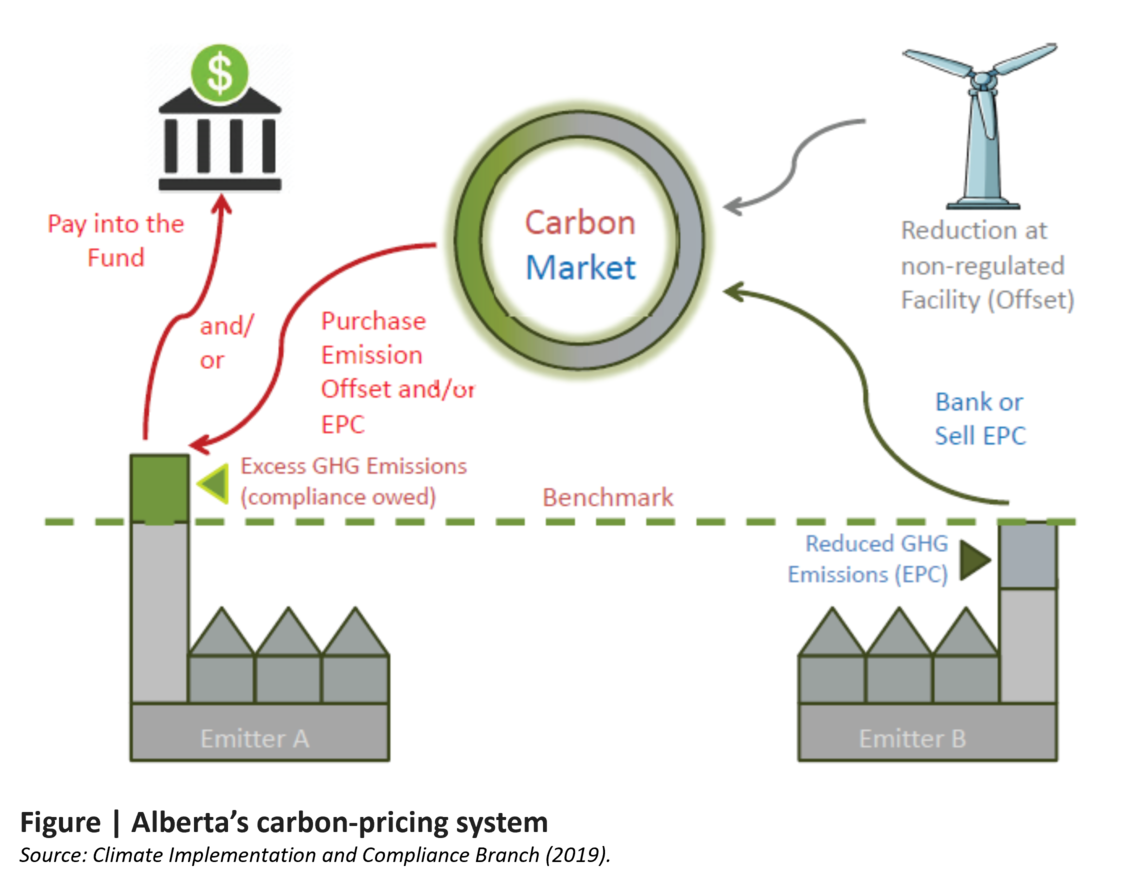
Key findings: Farmer participation in Alberta’s offset market remains low despite the province having one of the longest-standing systems. The review finds that regulatory uncertainty and limited credit revenue often make participation unattractive, particularly when the cost of implementing mitigation practices exceeds potential earnings. Policy uncertainty is also identified as a major driver of price fluctuations in the province, contributing to hesitation among farmers.
The study finds that agriculture remains a small contributor to global carbon credit supply and that the sector is still in an early stage of market development, with uneven MRV standards and limited evidence on long-term sequestration outcomes. These uncertainties affect the credibility of specific practices. Reduced tillage and zero-till often show variable carbon benefits and higher reversal risks, while regenerative agriculture demonstrates more consistent ecological improvements and appears more reliable for long-term carbon outcomes. The review suggests that policy design should guide farmers to adopt carbon-farming practices primarily for their agronomic and ecological co-benefits rather than uncertain credit revenues. Emphasizing soil improvement, productivity gains, and resilience can reduce exposure to price volatility and strengthen participation, supported by clearer protocols and more stable market conditions.