Big Data and precision agriculture: a novel spatio-temporal semantic IoT data management framework for improved interoperability
Aril 28, 2023 | JOURNAL OF BIG DATA
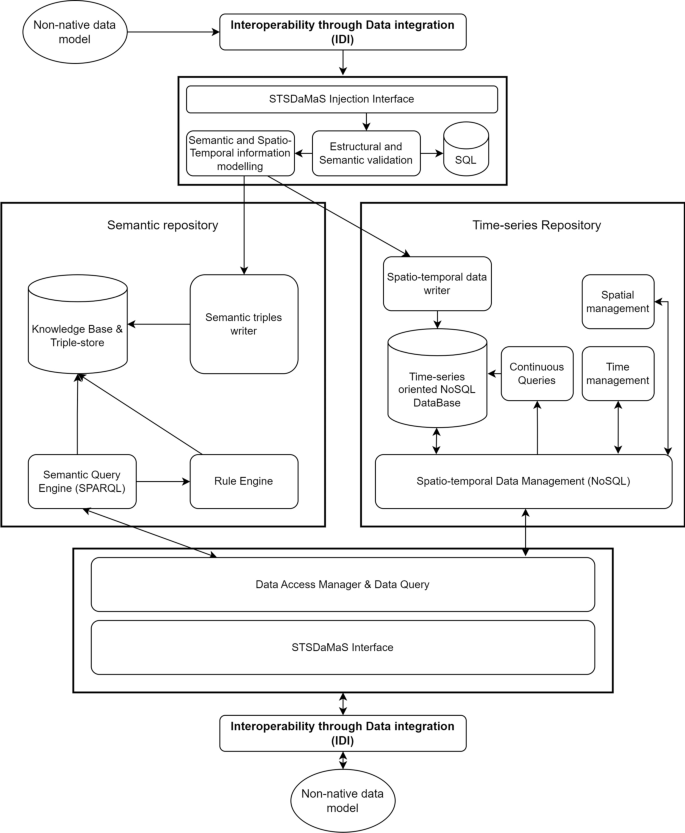
Researchers from Spain have developed an innovative system for managing spatial, temporal, and semantic data in precision agriculture within the realm of the Internet of Things (IoT). This system addresses the challenges posed by the diverse data collected from sensors deployed on farms and the lack of standards, which hampers interoperability with other management solutions. The proposed solution includes a data query system that enables farmers and users to resolve daily queries, aiding in decision-making, monitoring, and task automation. The framework ensures service interoperability and has been validated with two European smart farming platforms, AFarCloud and DEMETER. To evaluate the system, a neural network was implemented and trained using the framework, providing accurate forecasts for crop harvest and baling, particularly for forage legume crops used in livestock feeding. The study demonstrates the system's high performance in handling complex spatio-temporal semantic queries, and concludes with a distributed framework that integrates external agricultural data models to enable effective management of such data in precision agriculture.
Graphical abstract
Viewed Articles
Aril 28, 2023 | JOURNAL OF BIG DATA Researchers from Spain have developed an innovative system for managing spatial, temporal, and semantic data in precision agriculture within the realm of the Intern
Read More
April 2025 | Computers and Electronics in Agriculture | Volume 231Introduction: Agricultural robots could help automate labor-intensive tasks such as harvesting, pruning, and crop monitoring, but depl
July 14, 2025 | Land | Introduction: Digital and precision agriculture are widely recognized for improving farm efficiency, yet less is known about their broader social and institutional effects on t
March, 2024 | Frontiers in Plant Science | Introduction: Developing climate-smart agriculture requires cost-effective methods to characterize crop growing conditions. A research team from the America
November 07, 2022 | Molecular Plant | Introduction: Climate change and population growth necessitate a transition from traditional phenotypic selection to data-driven "smart breeding". A research tea
Introduction: Modern agriculture relies heavily on synthetic nitrogen fertilizers, which contribute to soil degradation, water eutrophication, and greenhouse gas emissions, making biological nitrogen


