March 1, 2025 | Field Crops Research |
Introduction: The benefits of cover crops for soil health and yield are well documented in temperate systems, but evidence from tropical, highly weathered soils remains limited. Brazilian research team led by the University of São Paulo (ESALQ/USP) conducted a five-year field study in the Brazilian Cerrado to evaluate how cover crop biodiversification affects soil health, soybean yield, and crop resilience to climate-related stresses.
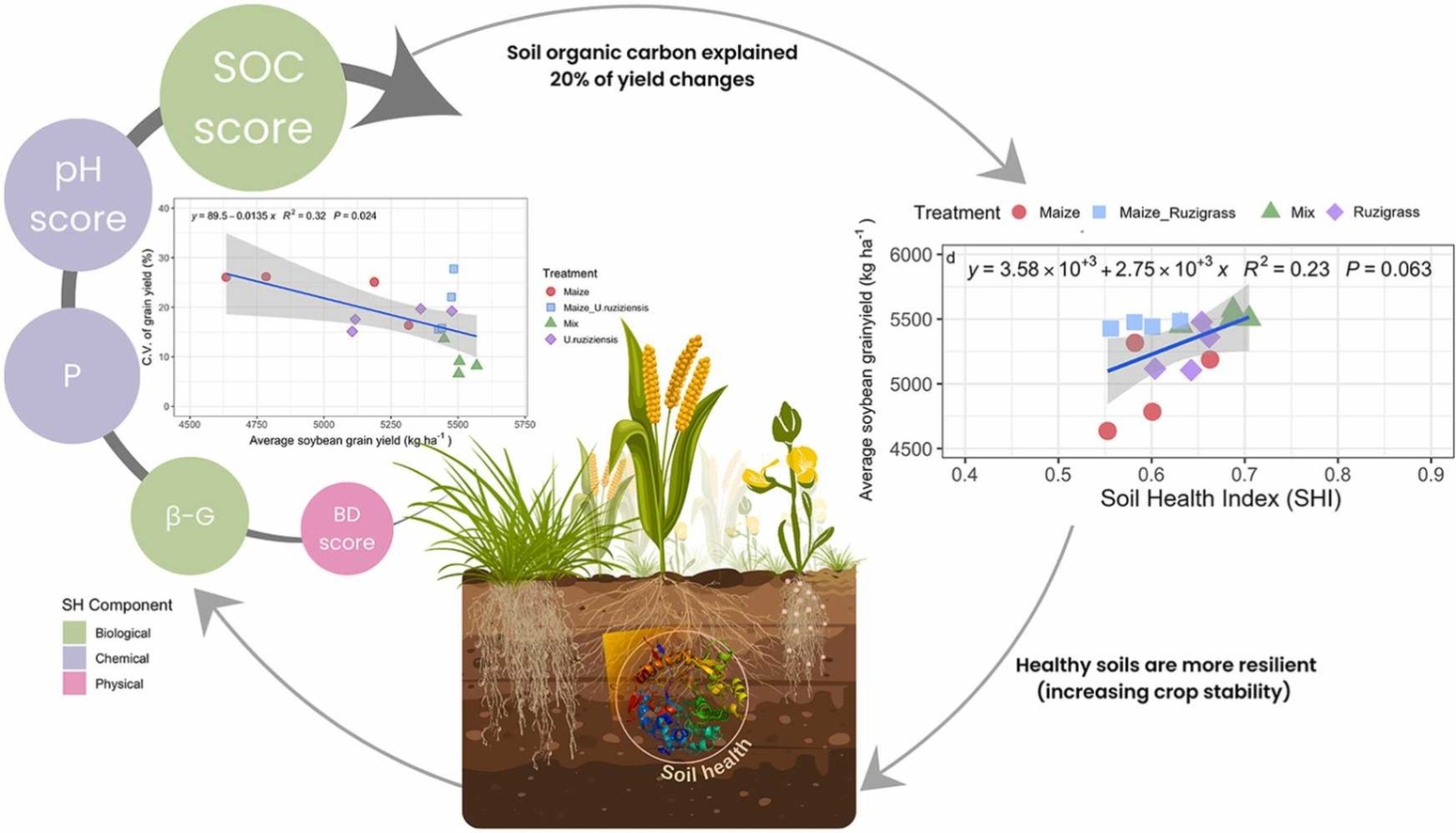
Key findings: Cover crop mixtures (ruzigrass, millet, and sunn hemp) and single ruzigrass plantings after soybean enhanced soil biological health and the composite soil health index (SHI) at the 0–10 cm and 0–30 cm layers compared with maize and ruzigrass-intercropped maize. Healthier soils were associated with higher soybean yields and greater yield stability across seasons. Soil organic carbon explained 20% of yield variation, while β-glucosidase activity, a biological indicator, explained 35% of yield resilience to climate stress, underscoring the role of soil biology in buffering weather shocks. These gains were observed after five consecutive years of cover crop management, reinforcing that long-term practice is required to realize meaningful improvements in soil health and resilience on highly weathered tropical soils such as those of the Cerrado. The study concludes that biodiversification through cover crops, particularly grasses or grass-legume mixes, offers a practical pathway to more productive and climate-resilient agricultural systems in tropical regions, with implications for smallholder farming across the Global South.
Graphical Abstract