Black soldier fly organic fertilizer: An integrated approach to soil health, low-carbon agriculture, and pest management
Sources of information
Black soldier flies may be small, but they could play a surprisingly big role in more sustainable farming. By breaking down organic waste, they can turn by-products into nutrient-rich fertilizer that supports healthier soils while potentially helping crops defend themselves against pests and diseases. In a recent IRRI greenhouse experiment with India’s specialty Kalanamak rice, seeds treated with 2% Black Soldier Fly-derived fertilizer showed up to a 42.85% increase in early germination, along with stronger seedling growth. By turning waste into a useful agricultural resource, Black Soldier Fly technology could help farmers improve soil health, reduce reliance on synthetic inputs, and move toward more circular and low-carbon farming systems.
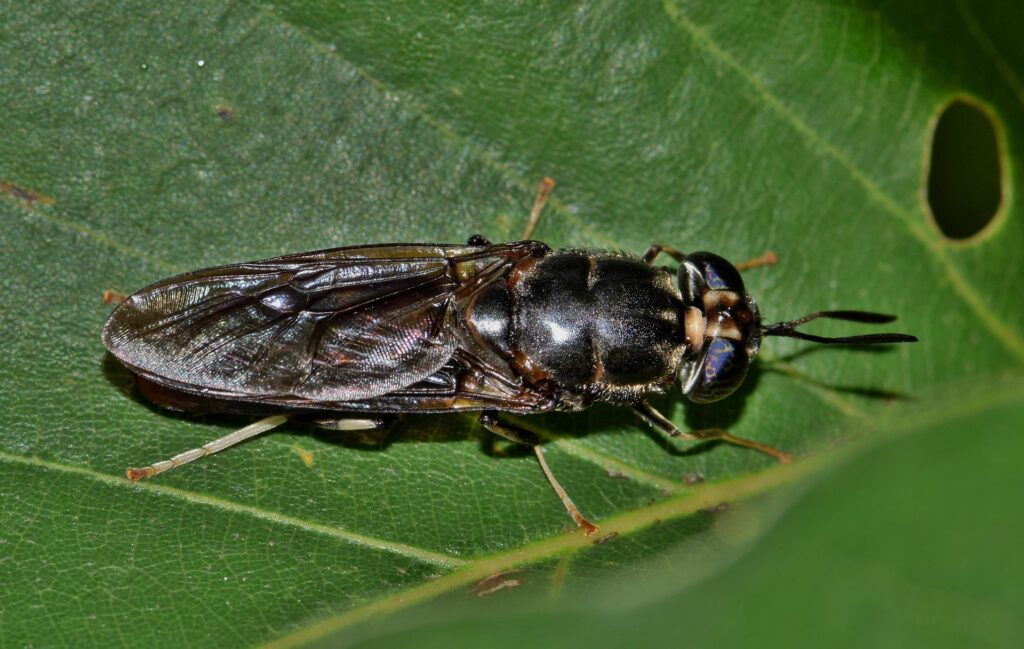
Content adapted from Rice Today (IRRI) | Image source: Rice Today (IRRI)
Viewed Articles
Black soldier flies may be small, but they could play a surprisingly big role in more sustainable farming. By breaking down organic waste, they can turn by-products into nutrient-rich fertilizer that
Read More
October 4, 2025 | Global Agriculture | Nadia Krishi Vigyan Kendra (KVK) has become India’s first Net Zero–certified agricultural science center, achieving a verified –74.99 tCO₂e net carbon footprint,
Open-field burning is fast and convenient, but it causes air pollution and greenhouse gas emissions. IRRI argues that farmers burn straw not simply by choice, but because of limited machinery, wet fie
December 18, 2025 | Yunlin County Government (In Chinese) | Yunlin County Government announced the adoption of probiotic technology to reduce GHG emissions from paddy rice cultivation as part of its l
15 July 2026 |European Commission – Agriculture and Rural Development |Livestock manure could become part of Europe’s answer to rising fertilizer costs and import dependence. The EU-funded FertiCover
March 9, 2026 | Rice Today (IRRI) | The article reports that a Google-backed N-Drip pilot in Changhua City, Taiwan, showed how gravity-based drip irrigation could reduce both water use and emissions i


