California Air Resources Board | Source | Download |
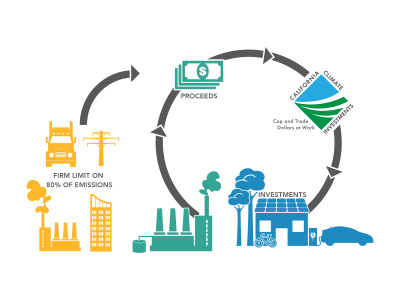
California's Cap-and-Trade Program is pivotal in the state's commitment to curbing greenhouse gas (GHG) emissions, aligning with Assembly Bill 32's goal to return to 1990 emission levels by 2020. This brief outlines key components and enhancements to ensure its effectiveness in achieving emission reduction targets. Enhancing California's Cap-and-Trade Program requires continuous adaptation and innovation. By incorporating strategic enhancements and fostering collaboration, the program can remain a cornerstone of California's climate strategy, driving meaningful emission reductions while promoting economic prosperity and environmental sustainability.
Key Components
- Market Mechanisms: The program sets a declining limit on major GHG emission sources, fostering investment in cleaner technologies. Allowances, each representing one metric ton of CO2 equivalent emissions, are auctioned annually, creating a carbon price signal to drive emission reductions.
- Scope and Coverage: Currently encompassing about 450 entities, including electricity generators and large industrial facilities, the program expands in 2015 to include fuel distributors. This broader coverage ensures accountability across sectors contributing to emissions.
- Allocation and Flexibility: Initially focusing on free allocation, particularly for industrial sectors, the program transitions gradually to more auctioning. Utilities receive free allowances, with requirements to benefit ratepayers and achieve emissions reductions, promoting equity and efficiency.
- Offset Credits: Up to 8% of a facility's compliance obligation can be met through offset credits, supporting emissions-reduction projects in the U.S. Offsets are subject to rigorous verification criteria, ensuring integrity and effectiveness.