Search
Nonthermal technologies to maintain food quality and carbon footprint minimization in food processing: A review

November 1, 2023 | Trends in Food Science & Technology | Source

Introduction: Researchers from National Chung Hsing University and National Kaohsiung University of Science and Technology in Taiwan conduct a literature review on nonthermal food processing technologies like high-pressure processing (HPP), pulsed electric fields (PEF), cold plasma (CP), and low-energy electron beams (LEEB), examining the effects on extending shelf life, reducing energy use, and maintaining food quality.
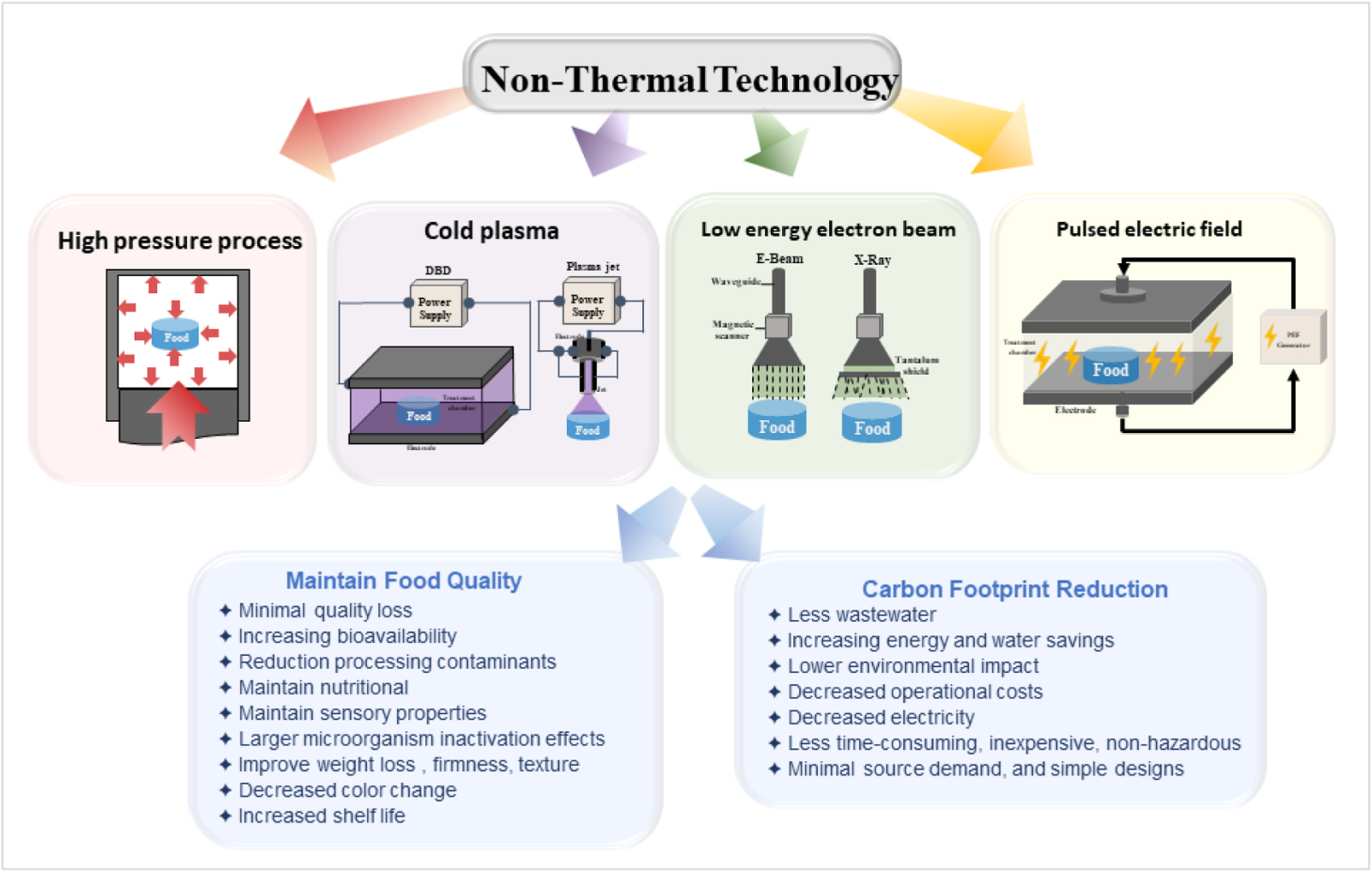
Figure | Schematic diagram of non-thermal emerging technology related to carbon footprint.

Viewed Articles
Nonthermal technologies to maintain food quality and carbon footprint minimization in food processing: A review
November 1, 2023 | Trends in Food Science & Technology | Source | Introduction: Researchers from National Chung Hsing University and National Kaohsiung University of Science and Technology in Taiwan c
Read More
Tailoring Australian carbon farming can realise greater co-benefits
January 20, 2026 | Nature Communications |  Introduction: This study, led by the Tasmanian Institute of Agriculture at the University of Tasmania (Australia) with participation from industry and resea
Challenges and prospects for agricultural greenhouse gas mitigation pathways consistent with the Paris Agreement
May 22, 2020 | Frontiers in Sustainable Food Systems |  Introduction: Global pathways consistent with the Paris Agreement rely on substantial reductions in agricultural methane (CH4) and N2O alongside
Addressing dairy industry's scope 3 greenhouse gas emissions by efficiently managing farm carbon footprints
April, 2023 | Environmental Challenges | Source |  Introduction: Upstream greenhouse gas (GHG) emissions (i.e. scope 3)—accounting for 70–90% of the dairy industry’s total emissions—pose a persistent
Potential soil organic carbon sequestration vis-a-vis methane emission in lowland rice agroecosystem
August 26, 2023 | Environmental Monitoring and Assessment |  Introduction: Lowland rice systems present a well-known climate trade-off, as management practices that increase soil organic carbon (SOC)
A conceptual framework for understanding the environmental impacts of ultra-processed foods and implications for sustainable food systems
September 25, 2022 | Journal of Cleaner Production | Source |  Introduction: Ultra-processed foods (UPFs) exacerbate the global food system’s failure by driving environmental harm, undermining nutriti
TOP